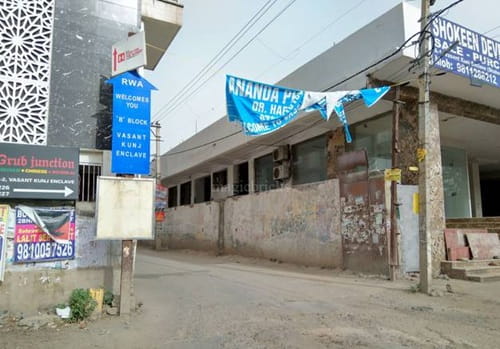
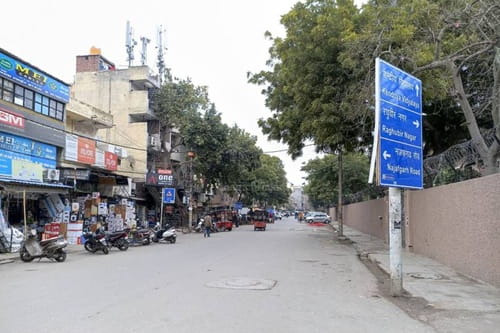
There is something quietly confident about Safdarjung Enclave. It doesn’t announce itself. No flashy signboards, no newly coined “smart city” branding. Just wide internal roads lined with old trees, bungalows from the 1960s sitting next to fresh builder floors, and a neighbourhood that has absorbed decades of Delhi’s expansion without losing its essential character.
Tucked inside South Delhi’s premium belt, Safdarjung Enclave carries the PIN code 110029 and sits under the R.K. Puram assembly constituency. Bounded roughly by AIIMS Trauma Centre to the east and Bhikaji Cama Place to the west, the locality is laid out in residential blocks — A-1, A-2, and B-1 through B-7. That block system matters in daily life here; locals don’t say “near Safdarjung Enclave,” they say “B-4 block” or “near the A-1 market.”
|
Quick Overview |
Details |
|
Location |
South Delhi, New Delhi |
|
PIN Code |
110029 |
|
Assembly Constituency |
R.K. Puram |
|
Nearest Metro Stations |
Green Park, Bhikaji Cama Place |
|
Distance to IGI Airport |
Approx. 10 km |
|
Distance to Hazrat Nizamuddin Railway Station |
Approx. 10.5 km |
|
Property Rate (approx.) |
Starting ₹15,146 per sq. ft. |
|
Key Nearby Areas |
Green Park, SDA, Sarojini Nagar, Ansari Nagar |
|
Nearest Hospital |
AIIMS, Safdarjung Hospital |
The Neighbourhood Layout and Character
What makes Safdarjung Enclave distinctive among South Delhi’s residential pockets is the visible layering of time. Original DDA bungalows — large-plotted, single-storey, with front lawns — still stand in sections of the B-blocks. Many have been renovated without being demolished. Right beside them, newer builder floors have come up over the past five to eight years, four to five storeys tall, with modular kitchens, covered parking, and security systems that the older residents didn’t feel the need for.
This isn’t a conflict. The old and new coexist because the street widths allow it, because the enclave layout was planned with enough breathing room that one building going vertical doesn’t choke the adjacent property’s light. That spatial generosity is increasingly rare in Delhi, and long-term residents here know it.
The SDA Market — Safdarjung Development Area’s commercial hub — operates as the daily anchor for the neighbourhood. Grocery runs, pharmacy visits, quick lunch stops, the odd evening out — most of it happens here. Over thirty restaurants and eateries operate in and around the SDA stretch, covering everything from Punjabi dhabas to The Big Chill, which has been drawing food lovers from across South Delhi for years.
Connectivity and Getting Around
Safdarjung Enclave’s location puts it within practical reach of two major metro lines. Green Park Metro Station on the Yellow Line and Bhikaji Cama Place Metro Station on the Pink Line serve the enclave, covering most metro commute directions without requiring a transfer. R.K. Puram Metro Station sits about 2.6 kilometres out. The S.J. Enclave Bus Stop handles local DTC movement.
For those who drive, the Ring Road connection is a daily reality — useful when traffic moves, frustrating during peak hours. IGI Airport is around 10 kilometres away, which means a cab ride to a 6 AM flight requires waking up earlier than people initially estimate, especially on days when the Ring Road slows down near Dhaula Kuan.
Parking, however, is the neighbourhood’s most discussed frustration. Internal roads in the older blocks were designed for a time when one household might own a single car. Today, households own two or three. Street parking has become territorial. This is not a Safdarjung Enclave-specific problem — it is a South Delhi-wide condition — but it is worth knowing before deciding to live here.
Healthcare Within Reach
Few residential addresses in Delhi can claim what Safdarjung Enclave does in terms of medical access. AIIMS sits to the east. Safdarjung Hospital, one of Delhi’s largest government hospitals with specialist departments and trauma care, is practically adjacent. For residents dealing with serious health situations, these proximity advantages are not minor. The average emergency response time from these hospitals to the enclave is cited at around 10 to 15 minutes.
Private options are also well-distributed. Multiple clinics, diagnostic centres, and 24-hour pharmacies operate within two kilometres. Aashlok Hospital and Diyos Hospital are among the frequently mentioned private facilities in the area.
Schools and Education Infrastructure
Families with school-age children have genuine options here. Within a three-kilometre radius, there are more than eight recognised schools, including institutions considered among South Delhi’s better-regarded ones. Weekend coaching classes, art studios, and sports academies have established themselves across the SDA and Green Park belt, which gives children and teenagers access to extracurricular options without long commutes.
Property Market: Where Things Stand in 2026
Safdarjung Enclave has never been the kind of place where prices crash. They occasionally plateau. But the direction over the long term has remained upward. Current property rates start at approximately ₹15,146 per sq. ft., though premium builder floors in well-located blocks command substantially higher prices.
Rental figures reflect the same reality. A 2 BHK in the enclave typically ranges from ₹20,000 to ₹70,000 per month depending on the block, floor, and fittings. A 3 BHK goes from ₹35,000 to ₹90,000. For a neighbourhood this close to AIIMS, the diplomatic zone, and South Delhi’s commercial spine, those numbers attract both professionals and families relocating to Delhi, though they also mean that budget-constrained renters move slightly outward to SDA or Green Park.
One honest observation: property taxes here are high. Residents mention it. Maintenance costs for builder floors average between ₹3,000 and ₹5,000 per month for common areas. Buyers entering this market need to factor recurring costs into their calculations, not just the purchase price.
What the Enclave Actually Offers Day to Day
The Safdarjung Club, positioned opposite the A-1 Block Market near the old Kamal Cinema building, has been a quiet social institution in the area for decades. Luxury car showrooms — Maruti, Hyundai, Mahindra — line sections of the outer commercial stretch, which says something about who the neighbourhood’s residents are and what kind of footfall the area generates.
Safdarjung Airport, located close to the enclave, functions as a government aviation hub handling official Central and State government flights alongside IGI. The Delhi Flying Club operates from here. Most residents don’t interact with the airport directly, but its presence explains why the area to the southwest stays relatively low-density and green — a small geographic bonus that the neighbourhood benefits from without planning for it.
The connection to Chanakyapuri, Lodhi Road, and Delhi’s diplomatic zone is another layer that makes Safdarjung Enclave what it is. Embassies, government bungalows, and Lutyens’ Delhi are all within a short drive. That proximity has historically brought in senior government officials, diplomats, and NRI buyers looking for an address that signals permanence.
Living Here: The Honest Picture
Safdarjung Enclave is not a neighbourhood for everyone. Entry costs are high. Parking is a genuine daily problem. Traffic at the Ring Road-adjacent exits turns slow during morning and evening hours. Air quality, like all of Delhi, worsens between October and January — the AQI data for the area has consistently registered moderate to poor levels through winter months in recent years.
What the enclave offers in exchange is a residential quality that Delhi’s newer peripheral colonies haven’t yet matched: mature tree cover, a functional street layout, walkable distances to markets and medical care, and a social infrastructure built over sixty years rather than assembled overnight. For people prioritising those qualities over lower costs or newer construction, it remains a compelling address.
FAQs
What is the PIN code for Safdarjung Enclave?
It’s 110029, and the post office serving the area goes by the same name.
Which metro stations are closest to Safdarjung Enclave?
Green Park on the Yellow Line and Bhikaji Cama Place on the Pink Line are the two most convenient options. Both are within practical commuting distance.
Is Safdarjung Enclave a good area for families?
Generally yes — schools, hospitals, and markets are close by, and the internal layout is quieter than the main roads suggest. Parking can be a daily headache though.
What are current property rental rates in the enclave?
2 BHK rents run roughly ₹20,000–₹70,000 per month and 3 BHK goes up to ₹90,000, depending on block, floor, and condition of the flat.
How far is Safdarjung Enclave from IGI Airport?
Around 10 kilometres. Budget at least 30–45 minutes for an airport run during normal traffic, more during peak hours near the Ring Road.