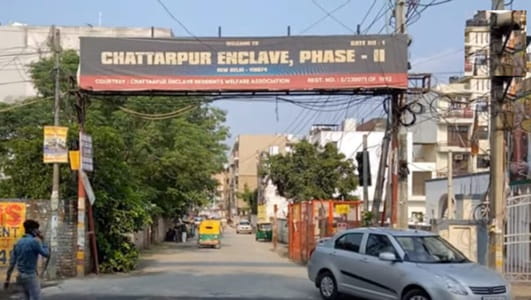
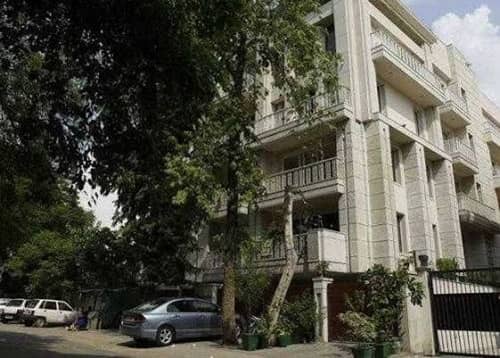
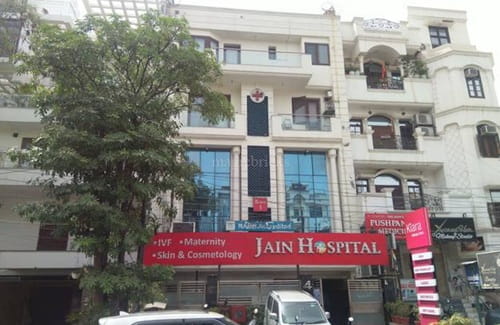
Delhi’s residential geography has a western frontier that most property discussions skip — Najafgarh, Masudabad, Nangli Sakrawati, and the flat, open belt that stretches toward the Haryana border. Ranaji Enclave sits within this frontier, a residential locality in Masudabad, Najafgarh, West Delhi, PIN code 110043, under the Najafgarh post office. It does not carry the premium address credentials of Dwarka’s planned sectors, but it offers something increasingly rare in Delhi’s western belt: affordability, low congestion compared to the urban interior, genuine green cover, and a metro station at 350 metres that connects the locality to the Blue Line and the full Delhi metro network within a short ride. For families and working professionals priced out of Dwarka or Uttam Nagar, Ranaji Enclave’s Najafgarh address delivers the fundamentals at a fraction of the cost.
The locality falls under the Roshanpura ward, Matiala assembly constituency, with MLA Gulab Singh, under the West Delhi Lok Sabha constituency with MP Parvesh Sahib Singh Verma. Nearby localities include Ranaji Enclave Part 2, A2 Golden Enclave, Nangli Vihar, Arjun Park, Indra Park, Mahesh Garden, and Ghasipura. National Highways NH-248BB and NH-44 are reachable from the locality. The Najafgarh road corridor connects westward toward Haryana and eastward toward Dwarka and Central Delhi.
| Quick Overview | Details |
| Location | Masudabad, Najafgarh, West Delhi |
| PIN Code | 110043 |
| Post Office | Najafgarh |
| Ward / Constituency | Roshanpura Ward / Matiala Assembly |
| MP | Parvesh Sahib Singh Verma (West Delhi Lok Sabha) |
| Nearest Metro | Nangli Station (Grey Line, 0.35 km); Dwarka Station (Blue Line, 0.88 km) |
| Key Roads | Najafgarh Road, NH-248BB, NH-44 |
| Connectivity Rating | 4.0 out of 5 |
| Safety Rating | 3.9 out of 5 |
| Key Hospitals | Kanojia Hospital, Saraswati Hospital and Laparoscopic Centre, RR Hospital |
| Key School | Venkateshwara International School |
The Grey Line at 350 Metres: Delhi’s Shortest Metro Line as a Daily Asset
The defining transit fact of Ranaji Enclave is precise: Nangli Metro Station on the Grey Line is 0.35 kilometres away — confirmed by YoMetro’s distance database. Dwarka Metro Station on the Blue Line is 0.88 kilometres away. For a locality as far west as Masudabad, Najafgarh, these are distances that transform what would otherwise be a road-dependent address into a metro-connected one.
The Grey Line is Delhi Metro’s shortest corridor — 5.19 kilometres across three stations: Dwarka, Nangli, and Najafgarh — with the proposed Dhansa Bus Stand extension as the fourth terminus. Opened in 2019 under Phase III, the line connects Najafgarh’s residential belt westward to Dhansa Bus Stand and eastward to Dwarka, where the single interchange with the Blue Line opens up the entire Delhi metro network. From Dwarka Metro Station (Blue Line and Airport Express interchange), residents of Ranaji Enclave can reach Dwarka Sector 21 for the Airport Express and Punjab/Haryana inter-state bus terminus, Central Delhi via Rajiv Chowk, Connaught Place, and Kashmere Gate, Noida and Vaishali via the Blue Line’s full east-west corridor, and Rajouri Garden and Kirti Nagar for West Delhi’s commercial strip.
Najafgarh Metro Station — the next stop on the Grey Line eastward from Nangli — serves Najafgarh’s main commercial belt directly, with the Najafgarh Main Market and Delhi Gate adjacent, property rates of ₹5,500 to ₹9,000 per sq. ft. in the station’s immediate catchment, and stable rental demand from working professionals and government sector workers. For Ranaji Enclave residents, Najafgarh Station is one stop away — making the entire Najafgarh commercial belt commutable without a vehicle.
Dwarka Mor Metro Station on the Blue Line is 1.91 kilometres from Ranaji Enclave — a further Blue Line access option confirmed by YoMetro. Dwarka Sector 14 Metro Station adds a fourth metro option within the locality’s broader accessible radius.
Najafgarh: Less Crowded, Greener, and Still Urban
The 99acres locality profile for adjacent Nangli Sakrawati makes an observation worth quoting for its relevance to Ranaji Enclave’s daily environment: “This area was least polluted area during pollution crisis of last year in Delhi because of large green cover.” The Najafgarh belt’s position at Delhi’s western edge — where urban density drops, agricultural land persists along the Haryana fringe, and the flat Najafgarh drainage basin provides natural open space — gives it an air quality and congestion profile that the interior Delhi belt cannot match.
The Najafgarh Lake (Sahibi Lake), one of Delhi-NCR’s largest water bodies and a significant migratory bird habitat, is within the broader Najafgarh administrative area — a natural ecological asset that gives the locality’s western setting a character well beyond the standard residential colony description. During winter months, the lake attracts significant bird populations, and the flat farmland approach toward it offers the kind of open-sky landscape that South and East Delhi addresses categorically cannot provide.
The DTC Bus Depot in Najafgarh, referenced as a key commute facility for the locality, handles DTC services toward the broader West Delhi network. The NoBroker listing for the locality at Nangli Dairy, Najafgarh confirms auto and shared cab availability for last-mile connectivity.
Schools, Healthcare, and the Najafgarh Commercial Belt
Venkateshwara International School is the most consistently cited educational institution for the Ranaji Enclave belt on 99acres. The broader Najafgarh area has government and private schools serving families across the Masudabad and Nangli Sakrawati belts, with the DTC connectivity to Dwarka’s school cluster giving families access to established schools in the planned sub-city.
Kanojia Hospital, Saraswati Hospital and Laparoscopic Centre, and RR Hospital serve Ranaji Enclave’s primary and secondary healthcare needs. Rohan Hospital and Surya Kiran Hospital are referenced for adjacent Nangli Sakrawati. For tertiary care, Dwarka’s hospital belt — including Venkateshwar Hospital — is accessible via the Grey Line from Nangli to Dwarka and onward.
The Anaj Mandi is cited as the primary shopping hub for Ranaji Enclave — the grain and general market that serves basic provisioning for the locality’s residents. Najafgarh Main Market, accessible via the Grey Line in one stop, handles a fuller range of retail, clothing, and daily needs. The Friday Market Chowk within the Najafgarh belt adds a weekly bazaar option for household provisioning.
Property Market and Locality Rating
Ranaji Enclave carries 20-plus properties for sale and 10-plus for rent in active listings, reflecting a consistent but not hyperactive transaction market. Residents rate the locality at 4.0 out of 5 for connectivity — meaningfully high for a Najafgarh address — and 3.9 out of 5 for safety. The 4.0 connectivity score directly reflects the Grey Line metro at 350 metres; without it, the score would look very different. Property rates in the Najafgarh belt at ₹5,500 to ₹9,000 per sq. ft. make Ranaji Enclave one of Delhi’s more accessible residential addresses with confirmed metro connectivity.
FAQs
Q1. What is the PIN code of Ranaji Enclave, Najafgarh, Delhi?
110043, under the Najafgarh post office. The full address is Ranaji Enclave, Masudabad, Najafgarh, West Delhi. The locality is in the Roshanpura ward, Matiala assembly constituency.
Q2. Which metro station is nearest to Ranaji Enclave, Najafgarh?
Nangli Metro Station on the Grey Line is 0.35 kilometres away — confirmed by YoMetro. Dwarka Metro Station on the Blue Line is 0.88 kilometres away. The Grey Line at Nangli connects to the Blue Line at Dwarka, giving access to the full Delhi metro network.
Q3. What is the Grey Line metro and how does it connect Ranaji Enclave to Delhi?
The Grey Line is a 5.19-kilometre, three-station corridor — Dwarka, Nangli, Najafgarh — opened in 2019 under Delhi Metro Phase III. It connects Najafgarh’s western residential belt to Dwarka, where the Blue Line interchange allows onward travel to Central Delhi, Noida, Rajouri Garden, and the Airport Express Line.
Q4. What are the practical strengths and limitations of living in Ranaji Enclave?
Strengths: Grey Line metro at 350 metres, low congestion compared to the urban interior, better air quality from the Najafgarh belt’s green cover and open spaces, affordable property prices, and daily access to Najafgarh’s commercial market. Limitations: distance from South Delhi’s premium employment and commercial hubs, limited large-format retail within walking distance, and water supply issues common to the western Delhi belt.
Q5. Which hospitals serve Ranaji Enclave, Najafgarh?
Kanojia Hospital, Saraswati Hospital and Laparoscopic Centre, and RR Hospital serve primary and secondary healthcare needs. Rohan Hospital and Surya Kiran Hospital are in adjacent Nangli Sakrawati. Venkateshwar Hospital in Dwarka is accessible via the Grey Line to Blue Line metro connection.