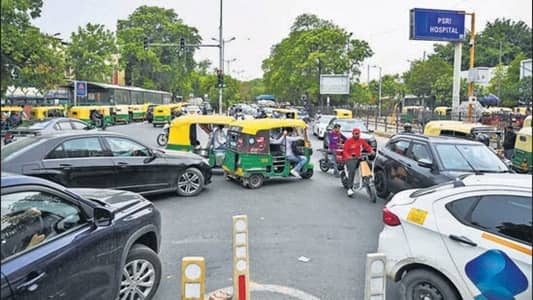
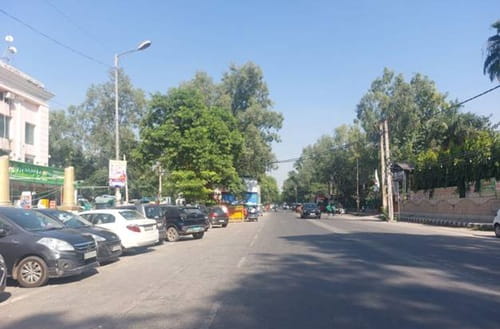
Not every South Delhi colony announces its status through real estate price tags alone. Sarvodaya Enclave earns its standing through something less quantifiable — the kind of neighbourhood where architects photograph the houses, filmmakers scout the streets, and the Gurudwara and Shiv Mandir sit quietly at opposite ends of the same colony, used by residents without ceremony. It is a locality that has been living well for a long time and shows no particular desire to prove it.
Sarvodaya Enclave occupies the Adhchini area of South Delhi, bordered by Sri Aurobindo Marg on one side and Sri Aurobindo Ashram’s Delhi Branch on its southern edge. PIN code 110017, under the South Malviya Nagar post office. Nearby localities include Navjeevan Vihar, Adhchini, Kalu Sarai, Hauz Khas, and IIT Delhi’s campus — a cluster that places Sarvodaya Enclave firmly in what could reasonably be called Delhi’s most intellectually concentrated residential belt.
| Quick Overview | Details |
| Location | Adhchini, South Delhi |
| PIN Code | 110017 |
| Main Road | Sri Aurobindo Marg |
| Nearest Metro Station | Hauz Khas (Yellow + Magenta Lines, ~1.1–2 km) |
| Distance to IGI Airport | Approx. 10 km |
| Nearest Railway Station | Lodhi Colony (~7.4 km) |
| Key Institutions Nearby | IIT Delhi (~2 km), JNU (~5 km) |
| Property Type | Independent floors, bungalows (4 BHK premium) |
| Apartment Price Appreciation | 18.2% year-on-year |
The Colony: Architecture, Green Cover, and Sri Aurobindo’s Presence
Sarvodaya Enclave is low-density and organised around internal roads wide enough to feel unhurried. Independent houses dominate — many of them architecturally distinctive enough that the colony has repeatedly attracted interior designers and architects who want to study or feature the buildings. The newer builder floors follow the South Delhi premium template: 4 BHK configurations on 300 to 400 sq. yard plots, with lifts, stilt parking, servant quarters, and park-facing orientations listed at prices ranging from ₹6.25 crore to upward of ₹11 crore.
The colony’s most unusual geographical feature is its adjacency to Sri Aurobindo Ashram’s Delhi Branch. The ashram operates The Mother’s International School, Mirambika Free Progress School, and a UCO Bank branch within its grounds — a combination that gives the immediate neighbourhood a contemplative, campus-like quality you simply do not find in most South Delhi residential pockets. Residents who have lived here for a decade or more specifically mention the ashram’s proximity as something that contributes to the enclave’s particular atmosphere. There is green cover on that side of the boundary that would otherwise have been built over.
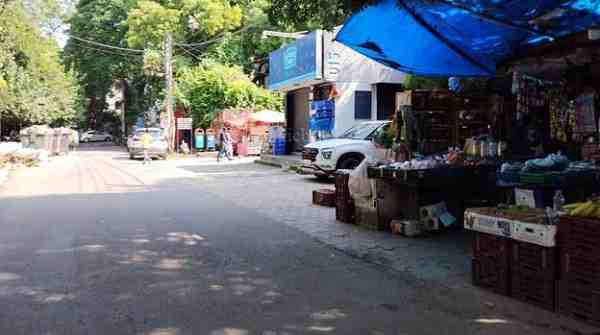
The colony’s own small market — with medical stores, groceries, stationery, a courier shop, and a cybercafe — handles daily provisioning without requiring residents to leave the enclave for routine needs.
Metro Connectivity and Road Access
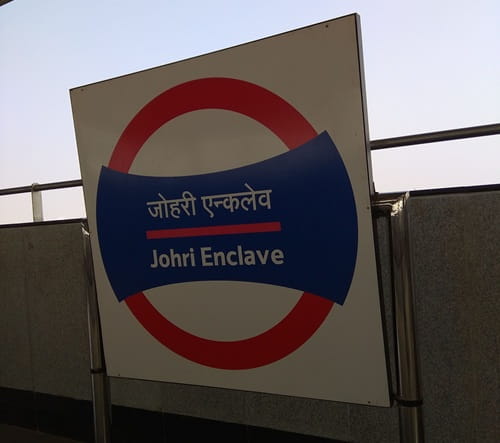
Hauz Khas Metro Station is the cornerstone of the enclave’s transit access. It is an interchange station where the Yellow Line and Magenta Line cross — one of Delhi’s more strategically positioned metro nodes. From Sarvodaya Enclave, it is approximately 1.1 to 2 kilometres away depending on the internal block. The Yellow Line covers the Delhi–Gurgaon corridor running through Central Secretariat, Rajiv Chowk, and onward to HUDA City Centre. The Magenta Line extends toward IGI Airport on one side and Botanical Garden, Noida on the other. That two-line interchange within 2 kilometres of home covers most commute directions without requiring a transfer.
Sri Aurobindo Marg is the primary road artery, connecting directly to NH-48 toward Gurgaon and NH-19 toward Noida. IGI Airport is approximately 10 kilometres via the New Rao Tula Ram Flyover — a practical distance that residents heading to early morning flights navigate with relative ease. Bhikaji Cama Place and Nehru Place, two of South Delhi’s major commercial hubs, sit within 7 kilometres. Hazrat Nizamuddin Railway Station is about 11 kilometres via August Kranti Marg and NH-48. DTC buses stop at Adhchini Bus Stop within the neighbourhood, supplementing metro access for shorter local movements.
A proposed elevated corridor and underpass on Sri Aurobindo Road has been identified as an infrastructure improvement that would ease traffic flow around the enclave — no confirmed completion date as of mid-2026, but the project is on record.
The Academic Neighbourhood Effect
The 2-kilometre distance to IIT Delhi and 5-kilometre proximity to Jawaharlal Nehru University are not incidental. They directly shape who lives in Sarvodaya Enclave. Faculty members, research scholars, senior academics, and professionals who value proximity to these institutions form a significant part of the enclave’s demographic. NIFT Delhi’s campus is also nearby. This academic concentration brings with it specific qualities — a quieter public culture than purely commercial neighbourhoods, residents with long tenure rather than frequent turnover, and an expectation of neighbourhood maintenance that keeps the colony from deteriorating in the way that rapid rental turnover can cause.
The Mother’s International School, accessible through the adjacent ashram grounds, is one of the most respected schools in South Delhi’s Hauz Khas belt and a primary reason families specifically target this enclave for residence. Shaheed Bhagat Singh College and Deshbandhu College — Delhi University affiliates — add undergraduate education options within accessible distance.
Healthcare
Max Super Speciality Hospital, Healing Touch Hospital, and Rosewalk Healthcare are all within 3 kilometres of the enclave. Pt. Madan Mohan Malviya Hospital handles general public healthcare needs within the broader South Delhi network. For specialist care, the proximity to both Max and the Hauz Khas–Green Park hospital belt means most medical needs are addressed without long travel. Multiple private clinics and diagnostic centres operate in the adjoining Kalu Sarai and Adhchini areas for routine consultations.
Shopping and Daily Life
Hauz Khas Village — Delhi’s most photographed weekend destination for its combination of a medieval water reservoir, boutique restaurants, art galleries, and design studios — is within easy reach. Aurobindo Market handles more everyday shopping across vegetables, household goods, and small retail. Green Park Market rounds out the options for mid-range dining and daily errands. For organised retail, DLF Mall and Square One Mall are accessible, covering anchor retail, dining, and multiplex entertainment at the South Delhi standard. The enclave’s own internal market removes the need to leave for truly routine daily needs.
Property Market in 2026
Sarvodaya Enclave is classified as a luxury locality in South Delhi’s property data. Builder floors on 300 to 400 sq. yard plots are listed between ₹6.25 crore and ₹11.75 crore. Apartment prices have appreciated 18.2% year-on-year — among the stronger appreciation figures in South Delhi’s premium belt. The rental market is active, driven by IIT Delhi and JNU-affiliated residents who want walkable proximity to those campuses without living in student-heavy areas. With 80-plus properties typically listed for sale and 40-plus for rent at any given time, supply is constrained enough to keep prices supported.
The enclave’s 4 BHK floors — wide plots, park-facing, Vastu-compliant, with full woodwork and modern fittings — represent the dominant premium product here. Buyers entering this market are looking at a minimum investment well above ₹6 crore for a standard first floor, with premium ground floor duplexes and penthouses with terrace gardens sitting considerably higher.
Living Here: The Honest Picture
Sarvodaya Enclave is a South Delhi residential address that has earned its reputation without aggressive promotion. The Sri Aurobindo Ashram boundary, the IIT Delhi proximity, two metro lines within 2 kilometres, a 10-kilometre airport run, Hauz Khas Village as the weekend default — these are not marketing bullet points but genuinely useful daily-life advantages. The colony’s safety rating is consistent and the community demographic produces low-turnover, owner-occupied housing that keeps internal standards high.
The challenges are familiar for any South Delhi premium colony: high entry prices, waterlogging around Hauz Khas and IIT Delhi-adjacent roads during heavy monsoon rain, and parking constraints for households with multiple vehicles. For buyers and renters who clear the financial entry point, Sarvodaya Enclave delivers a South Delhi residential quality that its quietness does not do justice to.
FAQs
Q: What is the PIN code of Sarvodaya Enclave, South Delhi?
A: 110017, shared with neighbouring Panchsheel Park and parts of Malviya Nagar. The serving post office is South Malviya Nagar.
Q: Which metro station serves Sarvodaya Enclave?
A: Hauz Khas Metro Station — an interchange between the Yellow and Magenta Lines — is the nearest, approximately 1.1 to 2 kilometres away depending on the block within the enclave.
Q: What are property prices in Sarvodaya Enclave in 2026?
A: Builder floors range from approximately ₹6.25 crore to over ₹11 crore depending on plot size, floor, and finish. Year-on-year apartment appreciation stands at 18.2%.
Q: Which schools and colleges are near Sarvodaya Enclave?
A: The Mother’s International School and Mirambika Free Progress School are adjacent through the Sri Aurobindo Ashram grounds. Shaheed Bhagat Singh College and Deshbandhu College are nearby. IIT Delhi and JNU are 2 and 5 kilometres away respectively.
Q: Which hospitals are nearest to Sarvodaya Enclave?
A: Max Super Speciality Hospital, Healing Touch Hospital, and Rosewalk Healthcare are all within 3 kilometres. Pt. Madan Mohan Malviya Hospital serves broader public healthcare needs in the area.