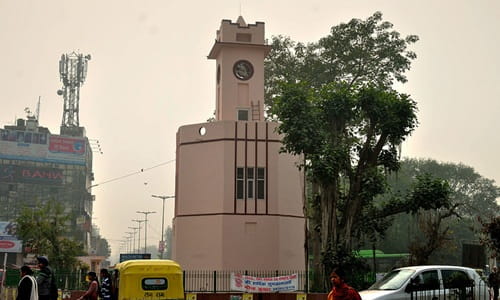
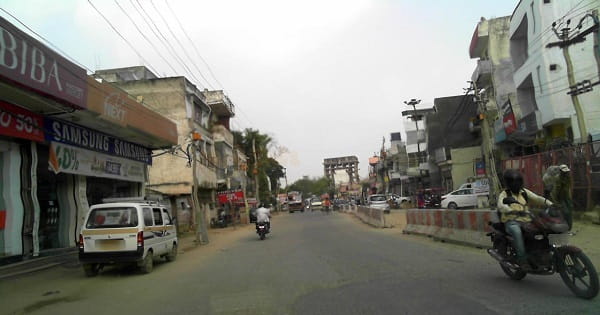
North East Delhi’s residential geography is often oversimplified in property conversations — it gets discussed as a single block of affordable housing rather than the varied patchwork of sub-localities it actually is. Johri Enclave, sitting in Johripur near the Delhi-Uttar Pradesh border, is one of those sub-localities with a distinct identity: it carries its own metro station on the Pink Line, sits near the industrial belts that generate rental demand, and has been steadily appreciated in value since the metro arrived in 2018. For buyers and renters working in East Delhi’s manufacturing and trading corridors, it makes a straightforward economic case.
Johri Enclave is located in Johripur, North East Delhi, with the broader locality carrying the same name as its metro station. Nearby sub-localities include Gulab Vatika, Tunda Nagar, Block F Johripur Extension, Jawahar Nagar, Ganga Vihar, Shiv Vihar, and Karawal Nagar. The city of Loni, Ghaziabad, borders the area to the east. Loni Road and Saharanpur Road are the primary arterial routes through and around the locality.
| Quick Overview | Details |
| Location | Johripur, North East Delhi |
| Nearest Metro Station | Johri Enclave (Pink Line, ~750 m) |
| Key Road | Loni Road, Saharanpur Road |
| Nearest Railway Station | Gokulpur Saboli Halt (~3.3 km); Delhi Shahdara Junction (~6 km) |
| Distance to Jhilmil/Patparganj Industrial Area | ~8–10 km |
| Distance to Sahibabad Industrial Area | ~10–12 km |
| Property Type | Independent houses, plots, builder floors |
| Property Rate Range | ₹7,777 – ₹17,888 per sq. ft. |
| Rental Range | ₹8,000 – ₹35,000+ per month |
| Key Hospital | Vikas Hospital and Surgical Center, Panchsheel Hospital |
The Locality and Its Character
Johri Enclave and the broader Johripur belt is a dense, working-class to lower-middle-income residential locality that has been transitioning through a visible upgrade since the Pink Line metro arrived in October 2018. The housing stock is predominantly independent houses and plots — compact constructions on small gaz plots, semi-furnished homes with basic amenities, and builder floors on 35 to 45 sq. yard plots that represent the most affordable entry point into Delhi’s residential property market. Active listings show 3 BHK houses on 45 sq. yard plots with three bathrooms and two balconies, semi-furnished homes offering access to both Shiv Vihar and Johri Enclave metro stations, and 40-gaj plots in closed-street society arrangements at prices well below Delhi’s city-wide averages.
The locality is described by long-term residents as having 24-hour conveyance availability — auto-rickshaws and e-rickshaws operate throughout the day and into the night, covering last-mile connections from the metro station and to connecting bus stops. Shiv Mandir serves as a community religious and social anchor within the locality. The ATM and hospital infrastructure, while not premium-tier, covers daily financial and basic medical needs within walking distance for most residents.
Johripur Extension, the adjacent sub-locality touching Shiv Vihar, Ganga Vihar, and Jawahar Nagar, shares the same transit infrastructure and general character. Residents there specifically note the 24-hour availability of autos and e-rickshaws as a consistent daily convenience, acknowledging in the same breath that some internal roads are narrow and prone to congestion — an honest observation that applies to most of North East Delhi’s older residential fabric.
Metro Connectivity: The Pink Line at 750 Metres
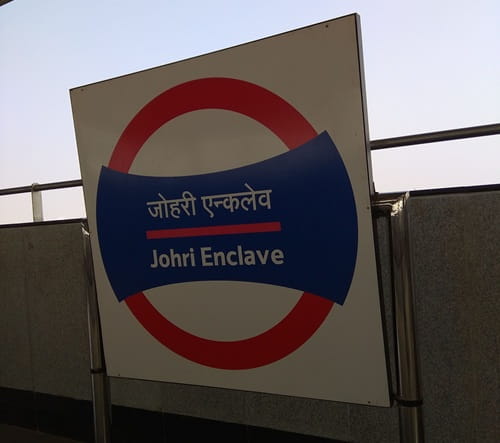
Johri Enclave Metro Station is the defining infrastructure asset of this locality. Opened on 31 October 2018 as part of Delhi Metro Phase III, the station is an elevated station on the Pink Line located in Gulab Vatika, Jawahar Nagar, approximately 750 metres from the main enclave. The Pink Line runs between Majlis Park in North West Delhi and Shiv Vihar in East Delhi, covering the arc from Azadpur, Netaji Subhash Place, Durgabai Deshmukh South Campus, Lajpat Nagar, Hazrat Nizamuddin, and Mayur Vihar in a corridor that covers both the northern residential belt and South Delhi in a single line without requiring a transfer.
For Johri Enclave residents, this is the daily transit anchor. The station serves two platforms — toward Shiv Vihar and toward Maujpur-Babarpur — and operates from 6:02 AM to 9:02 PM. Trains running daily handle thousands of commuters from the Johripur-Shiv Vihar belt. Facilities include lifts, escalators, enhanced CCTV security, updated digital information boards with real-time schedules, and integration with ride-booking apps for last-mile connectivity — upgrades implemented through 2025 that improved the station’s usability considerably.
Shiv Vihar Metro Station, the Pink Line’s eastern terminus, sits at the next stop from Johri Enclave — relevant for residents in the eastern sections of the locality who prefer walking to that station instead. Gokulpuri Metro Station is also accessible as an alternative Pink Line option in the other direction. For rail travel, Gokulpur Saboli Halt handles suburban rail movement at approximately 3.3 kilometres, and Delhi Shahdara Junction — a Ring Railway station — is about 6 kilometres away for broader inter-city access.
Employment and Industrial Proximity
The Johripur belt’s rental demand is primarily driven by its proximity to East Delhi’s industrial and trading corridors. Jhilmil Industrial Area and Patparganj Industrial Area are approximately 8 to 10 kilometres away. Sahibabad Industrial Area in Ghaziabad is within 10 to 12 kilometres. These belts house light manufacturing, warehousing, printing, garment processing, and ancillary trading units that collectively employ a large working population — much of which rents within the affordable corridors of Johripur, Shiv Vihar, and the adjoining localities. The Pink Line’s reach toward South Delhi’s service sector employment further widens the commuter base that keeps rental demand active.
Schools and Healthcare
RCS Convent Senior Secondary School and India International Secondary School serve secondary education needs in the Johripur belt. Government Primary School Johripur provides publicly funded primary education. Balaji Institute of Hotel Management and Sciences operates nearby for vocational higher education. The broader North East Delhi school network — with multiple government and private options scattered across Shiv Vihar, Ganga Vihar, and Jawahar Nagar — covers most family education requirements without requiring long commutes.
Vikas Hospital and Surgical Center is the nearest healthcare facility for the locality, with Panchsheel Hospital Pvt. Ltd. also cited as a nearby option. Gopal Hospital and Kavita Poly Clinic and Hospital are within the broader Johripur area. For serious specialist care, residents typically travel to Bhagwan Mahavir Hospital in Nangloi or the GTB Hospital in Shahdara — both accessible via the Pink Line or road.
Property Market in 2026
Johri Enclave and the Johripur belt sit at Delhi’s most affordable end of the property spectrum. Average property rates range from ₹7,777 to ₹17,888 per sq. ft. — well below the city-wide average of ₹18,200 per sq. ft. and reflecting the locality’s working-class demographic and older housing stock. Monthly rents run from ₹8,000 for compact 1 and 2 BHK options to ₹35,000 and above for larger semi-furnished floors. Property prices have appreciated steadily since the metro station’s 2018 inauguration, with the Pink Line’s connectivity premium being the primary driver. Investors tracking affordable-entry Delhi property with metro proximity have noted Johripur as part of the city’s pink-line appreciation corridor.
The TP Woodland Shopping Mall and nearby commercial markets handle retail and shopping needs. The locality’s commercial infrastructure remains basic but functional — adequate for daily life without requiring residents to travel out for routine needs.
Living Here: The Honest Picture
Johri Enclave is Delhi’s affordable Pink Line address — a working-class residential belt where the metro has genuinely changed daily life since 2018. The 750-metre walk to a fully operational metro station, round-the-clock auto and e-rickshaw availability, industrial employment within 10 kilometres, and property prices that remain one of the city’s most accessible — these are genuine, daily-life advantages for the households that live here.
The limitations are equally genuine. Narrow internal roads create congestion during peak hours. The locality’s social infrastructure — schools, hospitals, retail — is adequate but not premium. Air quality in winter follows the North East Delhi pattern, one of the city’s more affected zones. The Delhi-UP border location means some administrative and civic services straddle jurisdictions.
FAQs
Q1. Where exactly is Johri Enclave located in Delhi?
A: Johri Enclave is in Johripur, North East Delhi, near the Delhi-Uttar Pradesh border. It borders Gulab Vatika, Tunda Nagar, Jawahar Nagar, Ganga Vihar, Shiv Vihar, and the Loni area of Ghaziabad.
Q2. Which metro station serves Johri Enclave?
A: Johri Enclave Metro Station on the Pink Line is approximately 750 metres from the locality. It opened on 31 October 2018 and connects Majlis Park in North West Delhi to Shiv Vihar in East Delhi. Shiv Vihar Metro Station — the Pink Line’s eastern terminus — is one stop further and also accessible.
Q3. What are current property rates in Johri Enclave?
A: Property rates range from ₹7,777 to ₹17,888 per sq. ft. Monthly rents run from ₹8,000 for compact units to ₹35,000 and above for larger semi-furnished floors. Prices have appreciated steadily since the metro station’s inauguration.
Q4. Which industrial areas are closest to Johri Enclave?
A: Jhilmil Industrial Area and Patparganj Industrial Area are approximately 8 to 10 kilometres away. Sahibabad Industrial Area in Ghaziabad is about 10 to 12 kilometres out. This proximity is the primary driver of rental demand from factory and warehouse workers in the locality.
Q5. Which hospitals serve Johri Enclave?
A: Vikas Hospital and Surgical Center is the nearest facility. Panchsheel Hospital Pvt. Ltd., Gopal Hospital, and Kavita Poly Clinic and Hospital are within the broader Johripur belt. For specialist care, GTB Hospital in Shahdara is accessible via road or the Pink Line.