South Delhi carries a certain residential weight in conversation. But not all of it belongs to the tree-lined bungalow belt of Hauz Khas or the premium builder floors of Greater Kailash. Abul Fazal Enclave sits in the southern part of the city near Okhla and Jamia Nagar — a neighbourhood where affordability, a university presence, and reasonable metro access combine to produce a residential character unlike the premium South Delhi that property listings tend to spotlight. It is dense, community-oriented, and growing steadily in investment interest.
Abul Fazal Enclave carries PIN code 110025, within the Jamia Nagar postal region of South East Delhi. The enclave is divided into Part 1 and Part 2, each further laid out in blocks — A through M and beyond — with the Thokar number system used for address navigation within the locality. Nearby areas include Gulmohar Enclave, Okhla Vihar, Jasola, Jamia Nagar, Shaheen Bagh, and Kalindi Kunj. Okhla Vihar Metro Station sits directly within the enclave’s boundaries, its three gates named after the locality’s own landmarks.
| Quick Overview | Details |
| Location | Okhla, South East Delhi |
| PIN Code | 110025 |
| Postal Region | Jamia Nagar |
| Nearest Metro Stations | Okhla Vihar (Magenta Line, ~0.9 km, Part 1); Jasola Vihar (Magenta Line, ~0.8 km, Part 2) |
| Nearest Railway Station | Hazrat Nizamuddin (~8 km) |
| Distance to IGI Airport | Approx. 20 km via Outer Ring Road |
| Key University | Jamia Millia Islamia (~3 km) |
| Key Hospitals | Viola Hospital, Indraprastha Apollo Hospital (~2–4 km) |
| Property Type | Builder floors, independent floors, apartments (2–4 BHK) |
The Neighbourhood: Dense, Community-Rooted, and Systematically Organised
Abul Fazal Enclave is a systematically planned locality despite its dense appearance. The Thokar-based address system — a method of sub-locality referencing used across the Okhla–Jamia Nagar belt — means that addresses here are navigable once you understand the grid. The enclave is divided into Part 1 and Part 2, with Part 1 closer to the Jamia Nagar Police Station and Hari Kothi Road, and Part 2 adjacent to Jasola and Okhla Vihar.
The housing stock is predominantly independent floors and builder floors in 2 BHK, 3 BHK, and 4 BHK configurations. Properties here are compact by South Delhi premium standards but functional for families who prioritise a South Delhi address at affordable prices. Listings in Block D, Part 1 regularly appear with 20-foot wide streets, guard presence, lift access, private terrace rights, and car parking — specifications that reflect the enclave’s positioning as affordable but not unplanned. A 3 BHK builder floor of 700 sq. ft. carpet area on the top floor with roof rights is the kind of listing that attracts both owner-occupiers and investors looking at rental yields from the university population nearby.
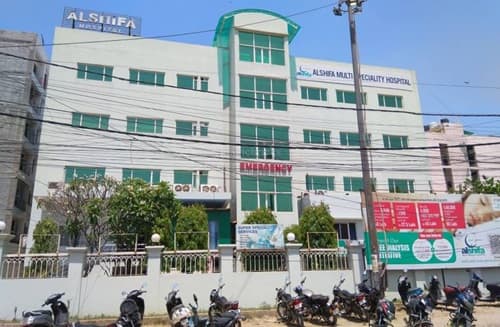
The Government Unani Hospital operates within the locality at no cost to residents — a public healthcare facility that is a genuine daily-life resource for families who rely on accessible, affordable medical care. Al Shifa Hospital, a private facility described as affordable by residents, is also referenced consistently as a nearby option.
Daily grocery markets, fresh produce stalls, and local eateries are within walking distance for most blocks. The enclave functions as a self-contained neighbourhood for routine daily needs, with the broader Okhla–Jasola commercial belt accessible for wider shopping and services.
Metro Connectivity: Two Magenta Line Stations
Abul Fazal Enclave’s metro access is its strongest infrastructure asset and the primary reason investor interest has risen here in recent years. Okhla Vihar Metro Station on the Magenta Line sits inside the enclave itself — with one of its three gates named Abul Fazal Enclave Part-I. The station is approximately 0.9 kilometres from the Part 1 blocks. For Part 2 residents, Jasola Vihar Metro Station is closer at about 0.8 kilometres.
Having two Magenta Line stations accessible from different parts of the same locality is uncommon in South Delhi and gives Abul Fazal Enclave a transit advantage that its price point does not immediately suggest. The Magenta Line connects westward through Hauz Khas, IIT Delhi, Saket, and onward to Janakpuri West — covering the airport corridor in one direction — and eastward through Jasola Apollo toward Botanical Garden in Noida. Jamia Millia Islamia Metro Station is another nearby option, further reinforcing the university belt transit infrastructure.
Okhla Bus Station serves daily bus commuters. Shared autos and e-rickshaws operate 24 hours, covering last-mile movement within the enclave and to the surrounding commercial areas. Okhla Railway Station is accessible for suburban rail needs, while Hazrat Nizamuddin Railway Station at roughly 8 kilometres covers inter-city rail travel via Maulana Mohammad Ali Jauhar Marg.
The Jamia Millia Islamia Factor
Jamia Millia Islamia — a central university with undergraduate, postgraduate, and research programmes across engineering, social sciences, humanities, law, and fine arts — sits approximately 3 kilometres from Abul Fazal Enclave. The university’s presence directly shapes the neighbourhood’s demand profile. Students, research scholars, visiting faculty, and university-adjacent professionals form a significant segment of rental demand in the enclave. Property owners in the enclave consistently benefit from a tenant pool that is driven by the university calendar rather than corporate lease cycles.
Milli Model School operates within the locality itself. Good Samaritan School and Jamia Millia Islamia University are within 3 kilometres. Al Falah School of Engineering and Technology and Jasola Public School add to the education infrastructure accessible from the enclave. Residents with school-age children have multiple government and private school options within daily commuting distance.
Healthcare
Viola Hospital and Indraprastha Apollo Hospital — the latter one of Delhi’s most prominent tertiary care facilities — are 2 to 4 kilometres from the enclave. Kalindi Hospital and ORL International Hospital are within the same radius. The in-locality Government Unani Hospital provides no-cost care for routine needs. Al Shifa Hospital handles private consultation at affordable rates by resident accounts. For serious medical emergencies, Apollo’s proximity via Jasola ensures specialist care is accessible without a long journey.
Property Market and Investment Case in 2026
Abul Fazal Enclave’s pricing positions it as South Delhi’s more accessible investment market. Properties in Block D and M of Part 1 are listed at competitive rates — 2-sided open 100-gaj plots, 4 BHK furnished flats, and 3 BHK builder floors with terrace rights are all available in the ₹60 lakh to ₹1.5 crore range depending on configuration. Rental demand from Jamia university-adjacent tenants and IT professionals commuting to Noida via the Magenta Line keeps occupancy rates healthy. The Magenta Line’s direct connection to Noida’s commercial belt means working professionals with Noida employment increasingly view Abul Fazal Enclave as a financially rational South Delhi base.
Residents rate connectivity at 4.3 out of 5 and safety at 3.9 out of 5 — figures that reflect genuine strengths and honest acknowledgment that internal road conditions in some blocks remain a concern. Several internal roads are in poor condition, something residents flag repeatedly as a civic maintenance gap that the locality’s growth otherwise outpaces.
Living Here: The Honest Picture
Abul Fazal Enclave is a neighbourhood that works well for those who approach it without the expectations that South Delhi’s premium addresses create. Two Magenta Line metro stations. A central university 3 kilometres out driving consistent rental demand. Apollo Hospital within reach. An in-locality government hospital. Affordable builder floors with functional specifications. These are the consistent delivery points.
The gaps are real: internal road quality in some blocks needs attention, parking pressure is a documented daily issue, and the density of the neighbourhood — while community-rich — means the open and airy feel of West or South Delhi’s planned residential colonies is absent. For budget-conscious buyers and investors tracking South Delhi’s more accessible property belt, Abul Fazal Enclave offers a practical, well-connected case.
FAQs
Q1. What is the PIN code of Abul Fazal Enclave, South Delhi?
110025. The locality falls under the Jamia Nagar postal region in South East Delhi and is divided into Part 1 and Part 2, each with multiple lettered blocks.
Q2. Which metro stations serve Abul Fazal Enclave?
Okhla Vihar Metro Station on the Magenta Line is approximately 0.9 kilometres from Part 1, with one of its three gates named after the enclave. Jasola Vihar Metro Station is about 0.8 kilometres from Part 2. Jamia Millia Islamia Metro Station is a third nearby option on the same line.
Q3. How far is IGI Airport from Abul Fazal Enclave?
Approximately 20 kilometres via the Outer Ring Road. The Magenta Line also provides a direct rail route to the airport terminal, making both road and metro options viable for airport travel.
Q4. What hospitals are near Abul Fazal Enclave?
A Government Unani Hospital operates within the locality at no cost. Viola Hospital, Kalindi Hospital, and ORL International Hospital are within 2 kilometres. Indraprastha Apollo Hospital is approximately 2 to 4 kilometres away for tertiary and specialist care.
Q5. Is Abul Fazal Enclave good for rental investment?
Yes, particularly for investors targeting the Jamia Millia Islamia university rental market and IT professionals commuting to Noida via the Magenta Line. The enclave’s two-station Magenta Line access, South Delhi address, and affordable entry prices make it a consistent rental yield opportunity compared to pricier South Delhi neighbourhoods.