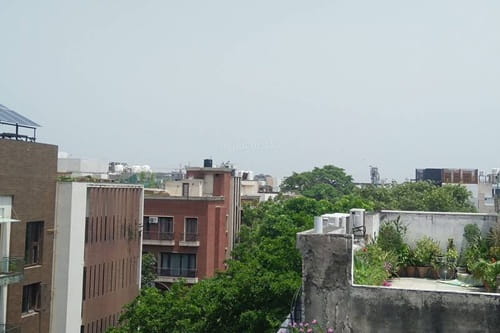
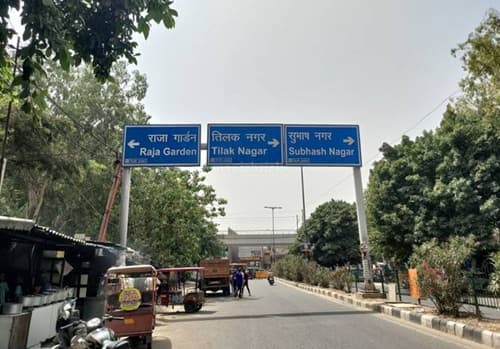
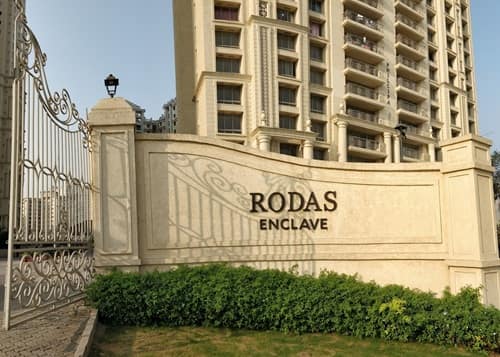
South Delhi’s southern fringe carries a different energy from the colony-dense belt of Greater Kailash or the corporate corridors near Saket. Chattarpur is greener, quieter, and unmistakably defined by two things that coexist without apology — farmhouse culture and Yellow Line metro access. Chattarpur Enclave sits inside this belt, spread across Phase 1 and Phase 2, and occupies a specific position in the South Delhi residential market: affordable by the standards of the neighbourhood it borders, well-connected by the standards of any Delhi locality, and surrounded by a landscape of party lawns, temple roads, and ridge greenery that makes it feel unlike most residential addresses this close to a metro station.
Chattarpur Enclave Phase 1 carries PIN code 110074. Phase 2 carries PIN code 110030. Both phases fall under the broader Chhatarpur area in South Delhi, bounded by SSN Marg, Main Chattarpur Road, Maidan Garhi Road, and Mehrauli-Gurgaon Road. Nearby localities include Maidan Garhi, Chattarpur Extension, Freedom Fighters Enclave, Sultanpur, Neb Sarai, Mehrauli, Sainik Farm, and Paryavaran Complex.
| Quick Overview | Details |
| Location | Chhatarpur, South Delhi |
| PIN Code | Phase 1: 110074 / Phase 2: 110030 |
| Metro Stations | Chhatarpur (Yellow Line, ~2 km); Qutab Minar (Yellow Line, ~1.77 km) |
| Distance to IGI Airport | Approx. 10 km |
| Distance to Cyber Hub, Gurugram | Approx. 12 km |
| Key Roads | SSN Marg, Mehrauli-Gurgaon Road, Main Chattarpur Road |
| Nearest Railway Station | Delhi Safdarjung (~12.1 km) |
| Property Rate Range | ₹4,000 – ₹7,500 per sq. ft. |
| Rental Range | ₹8,000 – ₹40,000 per month |
The Neighbourhood: Phases, Green Ridge, and the Farmhouse Fringe
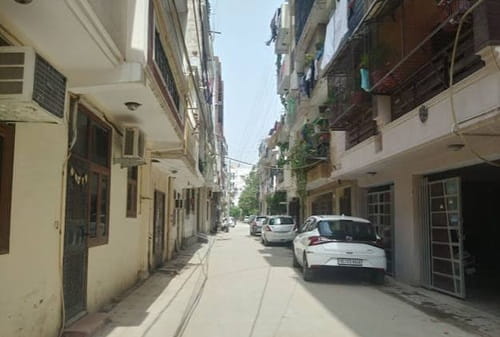
Chattarpur Enclave is divided into Phase 1 and Phase 2, each with its own block layout and slightly different character. Phase 1 is the older of the two, with a more settled residential feel and tighter lane widths. Phase 2 is larger, has more active listings, and sits closer to the Mehrauli-Gurgaon Road corridor — which makes it both better-connected to Gurgaon commuters and more exposed to traffic noise near the boundary.
What both phases share is the green ridge cover that wraps the Chattarpur belt. The locality is described by residents and agents consistently as being covered with green ridge area — a phrase that reflects actual tree cover and undeveloped ridge land that gives Chattarpur Enclave an air quality and visual character that Delhi’s denser residential belts cannot replicate. Business-class families who want space, greenery, and proximity to the Gurgaon corporate corridor without paying Vasant Kunj or Mehrauli prices have settled here in significant numbers over the last decade.
The enclave’s proximity to Chattarpur’s farmhouse and banquet belt is a double-edged reality. Weekend evenings bring elevated traffic on Chattarpur Mandir Road and Satbari Road as wedding and party venue traffic peaks. For residents who host or attend events, having Delhi’s densest concentration of farmhouse venues within a 3-kilometre radius is convenient. For those who prefer quiet weekend evenings, the noise and traffic are a documented seasonal inconvenience.
The Shri Aadya Katyayani Shaktipith Mandir — more commonly known as Chattarpur Temple, one of India’s largest temple complexes — is approximately 3 kilometres from the enclave. Qutab Minar, the UNESCO World Heritage Site, is about 4.8 kilometres away. These are not distant landmarks but functional neighbours that shape how residents experience the area’s geography on a daily basis.
Metro Connectivity: Two Yellow Line Stations
Chhatarpur Metro Station on the Yellow Line is approximately 2 kilometres from the enclave and Qutab Minar Metro Station is roughly 1.77 kilometres away — giving residents two Yellow Line access points that are both within practical auto or shared vehicle distance. The Yellow Line runs from Samaypur Badli in North Delhi to Huda City Centre in Gurugram, making it the most relevant metro corridor for Chattarpur Enclave residents commuting to Gurgaon’s Cyber Hub, Udyog Vihar, and DLF Phase corridors, which are 10 to 15 kilometres out. Multiple residents specifically flag this Gurgaon metro access as their primary reason for choosing the locality.
Sharing vehicles to both metro stations are readily available throughout the day, covering the 2-kilometre gap without residents needing personal vehicles for the daily commute leg. Sultanpur Metro Station is a further option on the same Yellow Line for residents accessing the southern Gurgaon belt.
IGI Airport is approximately 10 kilometres from Chattarpur — a proximity that makes early morning flight departures genuinely manageable. The Mehrauli-Gurgaon Road and SSN Marg provide the primary road links, connecting the enclave outward to NH-48 for the airport run and toward Saket, Vasant Kunj, and Central Delhi in the other direction. Saket District Centre, one of South Delhi’s primary commercial and employment hubs, is about 6 kilometres away. Nehru Place is approximately 12 kilometres.
A proposed Greater Noida to Gurugram RRTS corridor has been approved, which would create a 64-kilometre rapid transit corridor with integrated metro hubs in this belt — a future infrastructure development that residents and agents are already factoring into long-term property value assessments.
Healthcare
ILBS — the Institute of Liver and Biliary Sciences, a specialist hospital under the Delhi government — and Fortis Hospital are both within a 5-kilometre radius, covering the enclave’s serious healthcare needs. Apex Hospital, Manchanda Hospital, Yogmaya Multispeciality Hospital, and Nanda Hospital are cited specifically for Phase 2 residents. The broader Saket healthcare belt — with Max Super Speciality Hospital being the most prominent — is accessible within 6 to 8 kilometres via Mehrauli-Gurgaon Road.
Schools
St John’s School, Oxford Angel School, and Swarn Public School serve the enclave’s immediate educational needs. Bhatnagar International School and Vasant Valley School — two of South Delhi’s better-regarded institutions — are approximately 7 kilometres away. Modern International School and St Giri Public School are also cited by residents as known schools in the area. For families with college-going children, JNU and South Campus Delhi University colleges are accessible via the Yellow Line without a long commute.
Property Market in 2026
Chattarpur Enclave’s pricing is one of the most competitive in South Delhi. Phase 1 rates sit at approximately ₹5,000 per sq. ft. and the broader enclave range runs from ₹4,000 to ₹7,500 per sq. ft. — significantly below the Delhi city average of ₹18,200 per sq. ft. Monthly rents run from ₹8,000 for compact 1 BHK options to ₹40,000 for well-maintained 3 BHK builder floors. Active listings in Phase 2 show 4 BHK independent builder floors on 200 sq. yards, 3 BHK floors at ₹32,000 per month, and premium gated apartments like Magnolias of Chattarpur with private gardens and terrace spaces entering the upper end.
The real estate market here is described as steadily growing — transitioning from its farmhouse-dominated identity toward a broader residential profile. Developer AD Infra has already revised pricing upward with more revisions anticipated, reflecting the demand momentum building on the back of Yellow Line metro access and the Gurgaon employment corridor proximity.
Living Here: The Honest Picture
Chattarpur Enclave delivers a combination that South Delhi buyers on a budget find genuinely hard to replicate: green cover, Yellow Line metro access to Gurgaon, a 10-kilometre airport run, and property prices well below the city average. Residents rate Phase 2 at 4.3 out of 5 for connectivity and 4.1 out of 5 for safety — numbers that reflect genuine residential quality.
The limitations are real. Some internal roads in Phase 2 need maintenance attention. Weekend farmhouse traffic on Chattarpur Mandir Road creates congestion. The Tughlakabad Railway Station, at approximately 15 kilometres, is not practically close. And the locality’s unauthorized colony status historically limited home loan access — though the Delhi government’s 2026 regularisation of 1,511 unauthorized colonies under the PM UDAY scheme, applicable to this belt, has significantly changed that picture, making properties here newly eligible for home loans and formal redevelopment.
FAQs
Q1. What are the PIN codes of Chattarpur Enclave?
A: Phase 1 carries PIN code 110074 and Phase 2 carries PIN code 110030. Both phases fall under the broader Chhatarpur area in South Delhi.
Q2. Which metro stations are nearest to Chattarpur Enclave?
A: Qutab Minar Metro Station is approximately 1.77 kilometres away and Chhatarpur Metro Station is about 2 kilometres out — both on the Yellow Line connecting to Gurgaon’s Huda City Centre in one direction and North Delhi in the other.
Q3. How far is IGI Airport from Chattarpur Enclave?
A: Approximately 10 kilometres, making it one of the closer South Delhi residential addresses to the airport. Mehrauli-Gurgaon Road and NH-48 provide the primary access route.
Q4. What hospitals are near Chattarpur Enclave?
A: ILBS and Fortis Hospital are within a 5-kilometre radius. Apex Hospital, Manchanda Hospital, Yogmaya Multispeciality Hospital, and Nanda Hospital are close to Phase 2. Max Super Speciality Hospital in Saket is accessible within 6 to 8 kilometres.
Q5. Has the unauthorised colony status of Chattarpur Enclave been resolved?
A: Yes. The Delhi government’s 2026 regularisation of 1,511 unauthorised colonies under the PM UDAY scheme covers this belt, making properties eligible for home loans, formal ownership rights, and construction or redevelopment permissions — a significant change from the previous status.