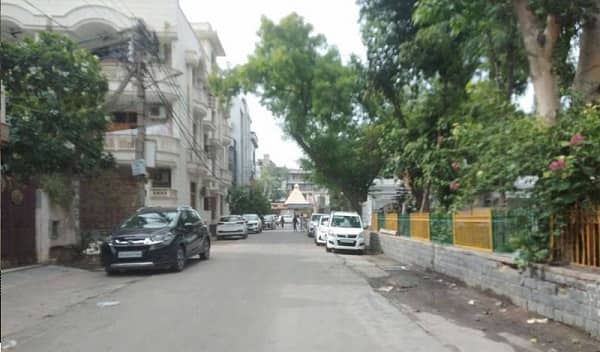
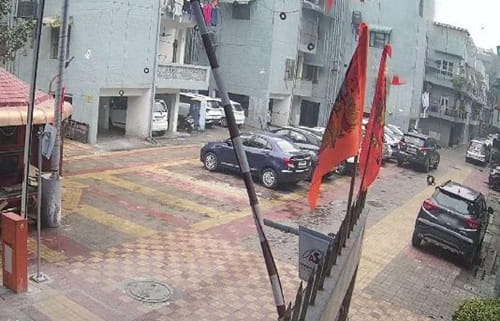
There is a specific kind of South Delhi residential address that earns its reputation not through flamboyance but through consistency — clean internal roads, a gated cooperative society structure, mature tree cover, and a Yellow Line metro station under a kilometre away. Geetanjali Enclave in Malviya Nagar is exactly that kind of address. It is not trying to out-premium Greater Kailash or out-green Panchsheel Enclave. It simply delivers a well-maintained, well-connected, community-oriented residential life with one of South Delhi’s better price appreciation stories behind it.
Geetanjali Enclave is a sub-locality of Malviya Nagar in South Delhi, carrying PIN code 110017. It is a registered cooperative residential society with approximately 174 member allottees and a registered office at C-9 Geetanjali. The colony is laid out in blocks — A, B, C, D, and others — with three entry gates: one from Saket and two on Shivalik Road. Nearby localities include Shivalik Colony, Navjeevan Vihar, Khirki Extension, Panchsheel Extension, Hauz Rani, and the broader Malviya Nagar residential belt.
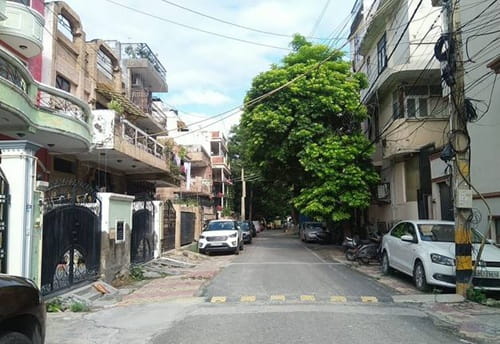
| Quick Overview | Details |
| Location | Malviya Nagar, South Delhi |
| PIN Code | 110017 |
| Colony Type | Registered Cooperative Residential Society |
| Total Allottees | Approx. 174 members |
| Nearest Metro Station | Malviya Nagar (Yellow Line, ~600 m–1 km) |
| Distance to IGI Airport | Approx. 12 km via Rao Tularam Marg |
| Distance to Select CityWalk | ~1.7 km (20-min walk) |
| Distance to Nehru Place | ~7 km via Outer Ring Road |
| Key Hospitals | Max Hospital Saket (~1.3 km), Neptune Hospital, GM Modi Hospital |
| Property Rate Range | ₹21,800 – ₹35,450 per sq. ft. |
The Colony: Cooperative Structure, Three Gates, and What That Means Daily
Geetanjali Enclave’s cooperative society structure is not a marketing designation — it is an operating reality that shapes how the colony functions. The cooperative governance means RWA decisions carry community backing, maintenance standards are collectively agreed upon, and the sense of shared ownership runs deeper than in purely commercial builder floor developments. Residents describe it as having an essence of community living — a phrase that sounds generic but is verified by the colony’s actual physical maintenance and social organisation.
Three entry gates — one facing Saket and two on Shivalik Road — control access into the colony. This gated layout keeps through-traffic out of internal lanes, which remain notably quieter than the roads just outside. Banks operate within the enclave: Punjab National Bank in A Block and HDFC Bank in B Block sit inside the colony, meaning routine banking is handled without stepping outside. The Geetanjali STC MMTC Market and Navjeevan Vihar Market both serve daily grocery, dairy, and household needs within or immediately adjacent to the colony perimeter.
Block D, the most discussed sub-block among prospective renters and buyers, is described consistently by residents as calmer than neighbouring areas, with Malviya Nagar Metro Station under 1 kilometre and daily needs easily accessible. The cooperative character does mean apartment options within the colony are limited — mostly 4 BHK ultra-premium builder floors and independent floors on plotted land rather than a dense stack of apartment choices.
Metro and Road Connectivity
Malviya Nagar Metro Station on the Yellow Line is the primary transit anchor, at approximately 600 metres to 1 kilometre depending on which block within the enclave the resident leaves from — a 9-minute walk from the colony’s central blocks. The Yellow Line connects Samaypur Badli in North Delhi to Huda City Centre in Gurugram, covering Hauz Khas, IIT Delhi, Saket, Qutab Minar, and Chhatarpur in one direction and Central Delhi’s Rajiv Chowk and Chandni Chowk corridor in the other. For professionals commuting to Gurgaon’s employment belt, this direct Yellow Line access without a transfer is a material daily-life convenience. Chirag Delhi Metro Station on the Magenta Line is also accessible nearby, and Saket Metro Station rounds out the three-station options within the locality’s reach.
Road connectivity runs through Geetanjali Marg, Press Enclave Marg, Sri Aurobindo Marg, and Lala Lajpat Rai Road — four arterial connections that together give the enclave access to multiple South Delhi corridors without being locked into a single exit point. The Rao Tularam Flyover connects toward IGI Airport at approximately 12 kilometres, making early morning flights practical without excessive travel time. Hazrat Nizamuddin Railway Station is roughly 11 kilometres away for inter-city rail travel.
Regular DTC bus services operate from Press Enclave Marg and Geetanjali Marg, supplementing metro access for shorter local trips. The ample parking space within the colony’s internal blocks is noted by residents as a distinguishing feature relative to adjacent Malviya Nagar streets where parking has become increasingly competitive.
Saket’s Shopping Belt at Walking Distance
Select CityWalk — consistently Delhi’s busiest and most visited upmarket mall — is 1.7 kilometres from the enclave, or a 20-minute walk. DLF Avenue and MGF Metropolitan Mall are within 2 kilometres. Square One Mall fills the remaining gap. For a residential colony this close to four significant retail and entertainment destinations, the dining, cinema, and weekend shopping options are genuinely varied without requiring any planning. Max Super Specialty Hospital at 1.3 kilometres is similarly walkable — a proximity that hotel guests staying in the enclave reference specifically for medical emergencies and specialist care.
The Garden of Five Senses, one of Delhi’s better-maintained public parks with landscaped trails and regular cultural events, is accessible close by. Qutub Minar is about 2.5 kilometres away — near enough to visit without treating it as a distant heritage excursion. Qutub Golf Course is a 0.7-kilometre walk, an unusual green space proximity that contributes to the enclave’s quieter outdoor character.
Schools and Healthcare
Gyan Bharati School, Shireen Public School, Swarn Public School, St Paul’s School, and St Anthony’s Senior Secondary School are among the schools serving the Geetanjali Enclave–Malviya Nagar belt. Apeejay School International and IIT Delhi are within the broader South Delhi institutional arc reachable within 5 kilometres. IIT Delhi, NIFT, and Sri Aurobindo College collectively represent the academic geography of this part of South Delhi, and the enclave’s proximity to them sustains a consistent graduate and faculty rental population.
Max Hospital Saket is the dominant healthcare anchor at 1.3 kilometres. Neptune Hospital, GM Modi Hospital, Geetanjali Hospital, Orthonova Hospital, Vashishta Clinics, and Vibhu Nursing Home cover the spectrum from speciality to routine care within the immediate radius. Pt. Madan Mohan Malviya Hospital adds a government healthcare option for residents who prefer or need public facilities.
Property Market in 2026
Geetanjali Enclave’s property market has appreciated sharply. Builder floor rates currently range from ₹21,800 to ₹35,450 per sq. ft., with Block D specifically showing rates of ₹27,581 to ₹27,940 per sq. ft. Five-year appreciation for builder floors stands at 51.8% and three-year appreciation at 29.1% — among the stronger appreciation figures for a South Delhi sub-locality outside the premium bungalow belt. The average builder floor rate in the enclave sits at approximately ₹27,250 per sq. ft. Monthly rents in Malviya Nagar overall range from ₹20,900 to ₹3,00,000 depending on configuration, with the Geetanjali Enclave premium tier attracting the upper bracket of that range.
The cooperative society’s limited plot inventory — approximately 174 allotted plots — keeps supply constrained, which directly supports price resilience. When a property in the enclave comes to market, it is rarely available long.
Living Here: The Honest Picture
Geetanjali Enclave is a South Delhi residential address that delivers its value proposition consistently and without dramatic swings. The Yellow Line metro under a kilometre away, Select CityWalk in a 20-minute walk, Max Hospital at 1.3 kilometres, cooperative governance keeping the internal environment maintained — these are the daily realities.
The honest limitations: parking pressure near the colony gates during mall-adjacent peak traffic hours, some internal road waterlogging during heavy monsoon rainfall in adjoining Malviya Nagar and Press Enclave areas, and a limited apartment inventory that means buyers must be patient. For those who clear the entry price and can wait for the right listing, few South Delhi sub-localities match this combination of infrastructure, greenery, governance, and appreciation at the same price band.
FAQs
Q1. What is the PIN code of Geetanjali Enclave, Malviya Nagar?
A: 110017. The enclave is a registered cooperative residential society within Malviya Nagar, South Delhi, with three access gates — one from Saket and two on Shivalik Road.
Q2. Which metro station serves Geetanjali Enclave?
A: Malviya Nagar Metro Station on the Yellow Line is approximately 600 metres to 1 kilometre away — a 9-minute walk from the enclave’s central blocks. Chirag Delhi Metro Station on the Magenta Line and Saket Metro Station are additional nearby options.
Q3. How far is IGI Airport from Geetanjali Enclave?
A: Approximately 12 kilometres via Rao Tularam Marg. The drive typically takes 30 to 40 minutes under normal traffic conditions.
Q4. What are current property rates in Geetanjali Enclave?
A: Builder floor rates range from ₹21,800 to ₹35,450 per sq. ft., with an average of approximately ₹27,250 per sq. ft. Five-year appreciation for builder floors stands at 51.8%. Monthly rents in the broader Malviya Nagar belt range from ₹20,900 upward.
Q5. Which hospitals are nearest to Geetanjali Enclave?
A: Max Super Specialty Hospital Saket is 1.3 kilometres away — walkable in 14 minutes. Neptune Hospital, GM Modi Hospital, and Geetanjali Hospital are also within the immediate locality. Pt. Madan Mohan Malviya Hospital provides a government healthcare option nearby.