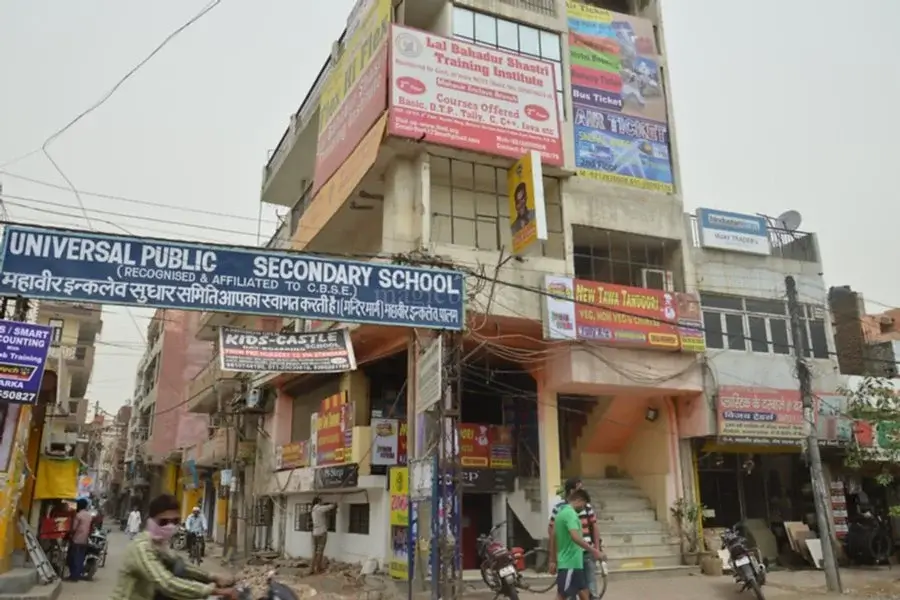
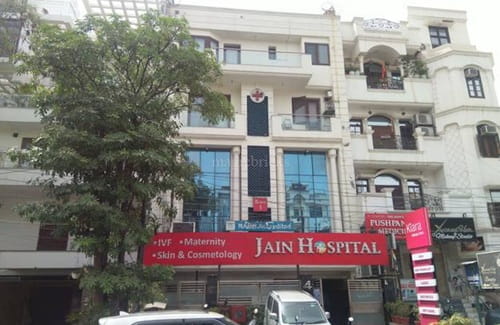
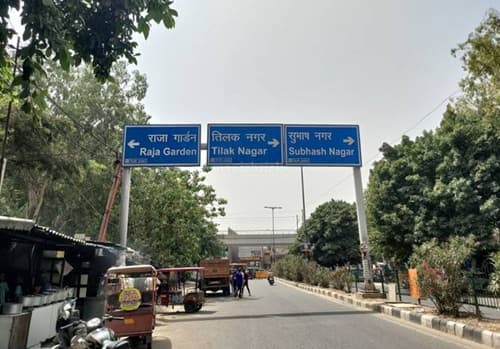
South Delhi has addresses that announce themselves and addresses that simply hold their ground, quietly, for decades. Gulmohar Enclave belongs firmly to the second category. Built by the Delhi Development Authority in 1983, it is a 300-apartment resident-owned cooperative society in Gautam Nagar — a postcode (110049) shared with Gulmohar Park, one of the most prestigious low-density enclaves in the country. That proximity is the enclave’s defining characteristic: it gives Gulmohar Enclave residents access to South Delhi’s finest residential geography, institutional anchors, and a Yellow Line metro station at walking distance, at prices that the adjacent Gulmohar Park belt has long since left behind.
The enclave’s address is Gautam Nagar, South Delhi, with Green Park Metro Station on the Yellow Line just 0.40 kilometres away. It sits flanked by Neeti Bagh, Yusuf Sarai, Green Park Extension, and Gulmohar Park, with Sri Aurobindo Marg and August Kranti Marg as the primary road connectors. AIIMS is 0.6 kilometres away. NIFT is barely a kilometre out. Siri Fort Auditorium and Sports Complex is adjacent. The Gulmohar Club — Gulmohar Park’s private social institution with a swimming pool, gym, sports facilities, and restaurant — sits within the broader belt. For an address constructed in 1983, the surrounding infrastructure has only grown more valuable with every passing year.
| Quick Overview | Details |
| Location | Gautam Nagar, South Delhi |
| PIN Code | 110049 |
| Society Type | DDA Cooperative (constructed 1983) |
| Total Apartments | 300 resident-owned units |
| Nearest Metro Station | Green Park (Yellow Line, ~0.4 km) |
| Distance to AIIMS | ~0.6 km |
| Distance to NIFT | ~1 km |
| Distance to IGI Airport | ~12 km |
| Key Roads | Sri Aurobindo Marg, August Kranti Marg, Outer Ring Road |
| MIG 3 BHK Apartment Rate | ~₹2 crore (₹20 million as of September 2025) |
| Duplex / Ground Floor Rate | ₹3.5 crore and above |
The Society and Its Residential Character
Gulmohar Enclave is a cooperative — not a privately built society, not a builder project, and not a DDA allotment colony in the typical sense. It was constructed by DDA in 1983 and ownership transferred to a resident cooperative, which has governed the society since. That structure produces a particular kind of residential stability: decisions are made by residents, maintenance is driven by owners’ interest in their own assets, and the community culture reflects decades of settled, owner-occupied living rather than the constant tenant turnover of purely rental-facing societies.
The building stock — constructed in the early 1980s — carries the external look of a government colony, as residents themselves honestly describe it. Red brick, functional rather than decorative architecture, apartments that reflect the standards of their era. What it lacks in modern lobby finishes and glass cladding it compensates for in plot generosity, ventilation, and the green cover of a neighbourhood that has had forty years for trees to grow and gardens to settle. Park-facing units are specifically sought after, and 2.5 BHK flats facing the Gulmohar Club, 3 BHK north-east facing units open from three sides on upper floors, and SFS society apartments with 24-hour security are among the configurations that appear in active listings.
The society’s 300 units across its blocks represent limited supply — an important driver of value support. When a Gulmohar Enclave apartment comes to market, it does not sit long. Buyers who know South Delhi understand what the address and the metro proximity represent.
Metro Connectivity: The Yellow Line at 400 Metres
Four hundred metres to Green Park Metro Station on the Yellow Line is not a convenient walk — it is a genuinely transformative daily-life asset. The Yellow Line connects Samaypur Badli in North Delhi to Huda City Centre in Gurugram, covering Rajiv Chowk, Central Secretariat, Khan Market, Lajpat Nagar, and the full South Delhi arc on one corridor. Heading south: AIIMS Metro Station is one stop away, Safdarjung (Sri Aurobindo Marg) area is covered, and Malviya Nagar, Saket, and Gurgaon are accessible in a straight line without transfers. AIIMS Metro Station itself — barely a kilometre from the enclave — opens the immediate institutional campus to metro-based access.
Chirag Dilli Metro Station on the Magenta Line is accessible nearby, adding a second metro line for residents who need access to the airport corridor or Hauz Khas interchange. Sri Aurobindo Marg and the Outer Ring Road provide road-based connectivity — the former toward Vasant Kunj and the airport, the latter looping through the South Delhi arc. Safdarjung Terminal and Lodhi Colony Railway Station are the rail-based options for outstation travel. IGI Airport is approximately 12 kilometres via Rao Tularam Flyover — a 30 to 40-minute drive under normal conditions.
AIIMS, NIFT, and the Institutional Neighbourhood Effect
Gulmohar Enclave’s 0.6-kilometre proximity to AIIMS is not incidental to its residential character. The All India Institute of Medical Sciences — India’s premier medical institution, covering undergraduate, postgraduate, and research programmes across clinical and basic sciences — generates a consistent demand profile for the surrounding residential belt. Doctors, resident physicians, faculty, and researchers at AIIMS form a significant part of the renter and buyer population in Gautam Nagar and Gulmohar Enclave. That demographic produces a stable, professionally disciplined tenant pool that long-term property owners specifically value.
NIFT — National Institute of Fashion Technology — is approximately 1 kilometre away, adding a design and creative arts student population to the demand mix. The enclave’s rental demand is accordingly diversified: AIIMS medical professionals, NIFT students and faculty, corporate professionals commuting toward Gurgaon via the Yellow Line, and senior South Delhi residents who want cooperative ownership rather than builder society living.
Siri Fort, Hauz Khas, and the Leisure Geography
The Siri Fort Auditorium and Sports Complex — the cultural venue that hosts Delhi’s most significant film festivals, classical music performances, and theatrical events — sits adjacent to the enclave. For residents who attend these events regularly, the walking proximity is a quality-of-life advantage that cannot be replicated by building amenity inside a society. Deer Park and Hauz Khas Fort are less than 4 kilometres away. Hauz Khas Village, Green Park Market, Yusuf Sarai Market, and South Extension I and II are all accessible within 2 to 5 kilometres — covering daily retail, weekend dining, and the kind of South Delhi market activity that defines the neighbourhood’s social geography.
Select CityWalk, DLF Avenue, DLF Promenade, and Emporio are within 5 to 8 kilometres, handling premium retail and entertainment. HUDCO Place commercial complex is also nearby for professional services and office-adjacent needs.
Schools and Healthcare
DAV Model School, Father Agnel School, NDMC Model Senior Secondary School, Srimad Dayanand Ved Vidyalaya, NPCoEd Model Senior Secondary School, and Delhi Police Public School are among the schools accessible within the immediate Gautam Nagar–Green Park belt. For families with school-age children, the concentration of established CBSE schools within a 1 to 2-kilometre radius is a primary reason for long-term ownership commitment.
AIIMS Hospital and Safdarjung Hospital — two of India’s most significant government multispeciality hospitals — are both within 4 kilometres. For residents dealing with serious medical conditions or specialist consultations, having both institutions within a short drive or metro ride is a genuine daily-life advantage that South Delhi’s inner belt provides and outer NCR addresses rarely match. Adiva Hospital, Leekha Nursing Home, Sukhmani Hospital, Mohinder Hospital, and Nutech Mediworld serve routine and secondary care needs closer to the enclave.
Property Market in 2026
Gulmohar Enclave’s 300 apartments are documented in Wikipedia as having MIG apartment values of approximately ₹2 crore (₹20 million) as of September 2025, with duplex and ground-floor configurations priced at ₹3.5 crore and above (₹35 million+). Active listings confirm 3 BHK flats at ₹2.55 crore for 2,100 sq. ft., 2 BHK SFS society apartments priced accessibly for the belt, and 4 BHK units in the ₹2.91 crore range. The broader Gulmohar Park belt averages ₹39,200 per sq. ft. — making Gulmohar Enclave’s DDA cooperative pricing a significant relative value within the same postcode.
South Central Delhi high-end property has seen approximately 15% capital appreciation, driven by limited supply and consistent demand from institutional, professional, and diplomatic residential buyers. Gulmohar Enclave’s 300-unit cap on supply means that appreciation is structural rather than speculative — every time a unit sells, it does so within a context of genuinely constrained available stock.
Monthly rents in the Gulmohar Park–Gulmohar Enclave belt range from ₹40,000 to ₹1,20,000 depending on configuration, furnishing, and floor. The 4-out-of-5 safety rating from residents reflects the combination of gated entry, 24-hour security, RWA governance, and the settled owner-occupier character of the society.
Living Here: The Honest Picture
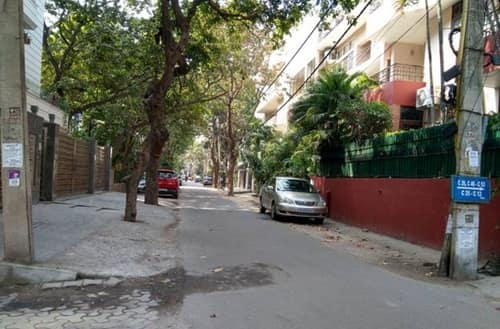
Gulmohar Enclave is an honest South Delhi address. The buildings look their age — 1983 DDA construction, functional not decorative, with narrow internal lanes that reflect a time when fewer households owned cars. Ventilation and light quality vary by floor and facing. The external aesthetic will never compete with a premium builder society launched in 2022.
What the enclave delivers that no recently launched project can replicate is a four-decade track record of resident-governed cooperative living, walking distance from Green Park Metro, 600 metres from AIIMS, adjacency to Siri Fort, the full South Delhi institutional and lifestyle infrastructure within reach, and a property value floor set by one of the most sought-after postcodes in the country.
FAQs
Q1. What is the PIN code of Gulmohar Enclave, Delhi?
110049. The enclave is in Gautam Nagar, South Delhi, sharing the postcode with the adjacent Gulmohar Park belt. The post office serving the area is South Delhi’s Green Park region.
Q2. How close is Green Park Metro Station to Gulmohar Enclave?
Approximately 0.4 kilometres — a genuine walking distance of 5 to 6 minutes. Green Park Metro Station is on the Yellow Line, connecting directly toward AIIMS, Hauz Khas, Saket, Malviya Nagar, and Huda City Centre in Gurugram.
Q3. What type of housing is available in Gulmohar Enclave, Delhi?
The society has 300 resident-owned DDA apartments constructed in 1983 — 2 BHK SFS flats, 3 BHK MIG apartments typically spanning 1,600 to 2,100 sq. ft., and larger duplex and ground-floor configurations. All units are in the resale category. No new construction is available within the society itself.
Q4. What are property prices in Gulmohar Enclave?
MIG 3 BHK apartments are valued at approximately ₹2 crore as of late 2025. Duplex and ground-floor units start at ₹3.5 crore and above. Active resale listings in 2026 show 3 BHK flats at ₹2.55 crore and 4 BHK units around ₹2.91 crore. The broader Gulmohar Park belt averages ₹39,200 per sq. ft.
Q5. Which hospitals are nearest to Gulmohar Enclave?
AIIMS is approximately 0.6 kilometres away — within walking distance. Safdarjung Hospital is within 4 kilometres. Adiva Hospital, Leekha Nursing Home, and Sukhmani Hospital handle routine care closer to the enclave. Max Multispeciality Panchsheel Park is within a 3-kilometre radius.