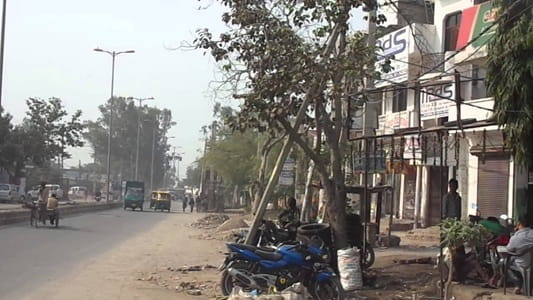
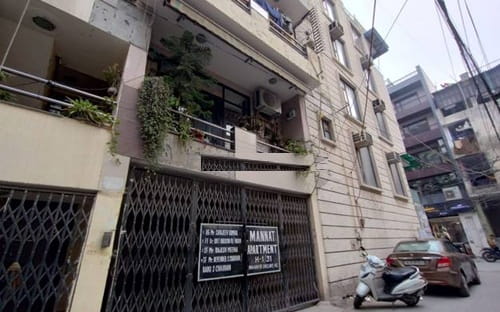
Paschim Vihar carries a residential reputation that most West Delhi localities spend decades trying to earn. Wide internal roads, organised block layout, parks at regular intervals, Green Line metro access, and a school density that makes nine institutions within 1 kilometre a documented fact rather than a marketing claim — it is a locality that functions the way Delhi’s planned residential colonies were designed to. Shubham Enclave sits within this belt, on the Outer Ring Road side of Paschim Vihar near the Peeragarhi crossing and Jwalaheri, and draws directly from everything the broader locality provides.
Shubham Enclave, Paschim Vihar, carries PIN code 110063. It is positioned along the Outer Ring Road adjacent to Bhera Enclave and Jwalaheri, with its blocks — A, B, and others — facing the National Market, District Park, and Jwalaheri Road. The community centre on Block A, Nangloi Saiyed Road, serves as one of the commercial and civic anchors of the enclave. Nearby localities include Bhera Enclave, Guru Harkishan Nagar, Sunder Vihar, Pushkar Enclave, Mianwali Nagar, and Peeragarhi. The Outer Ring Road, which divides Paschim Vihar east (PIN 110063) from the western side (PIN 110087), runs along the enclave’s boundary.

| Quick Overview | Details |
| Location | Paschim Vihar, West Delhi |
| PIN Code | 110063 |
| Key Roads | Outer Ring Road, Jwalaheri Road, Nangloi Saiyed Road |
| Nearest Metro Stations | Paschim Vihar West (Green Line); Peeragarhi (Green Line) |
| Nearest Railway Station | Mangolpuri Railway Station |
| Distance to IGI Airport | Approx. 18–20 km |
| District Park | Opposite B-10 Block, Jwalaheri Road |
| Key Hospital | Sri Balaji Action Medical Institute (~1.82 km) |
| Property Type | Independent floors, builder floors, flats |
| Average Apartment Rate | ~₹18,900 per sq. ft. (Paschim Vihar belt) |
The Neighbourhood: Organised, Green, and Family-Oriented
Shubham Enclave’s address — blocks A and B along Jwalaheri Road, with the District Park directly opposite Block B-10 between Gate No. 1 and Gate No. 2 — establishes the enclave’s character immediately. A park of that scale, directly facing a residential block on a named road, is one of those daily-life advantages that compounds over years. Residents who live in park-facing properties here use it morning and evening, and parents of young children cite it specifically when explaining why they chose the enclave.
The housing stock is a mix of independent floors, builder floors, and flats. The listing spectrum covers 3 BHK floors on 200 sq. yard plots at ₹1.50 crore, ultra-luxurious 3 BHK independent floors of 1,980 sq. ft. on 220 sq. yards in north-east facing park-facing orientations at ₹4.35 crore, and 3 BHK flats at 1,400 sq. ft. in A-2B Block at approximately ₹1.85 crore. That range reflects a housing market where entry-level and premium properties coexist within the same enclave, driven by plot size, floor, orientation, and construction quality.
Paschim Vihar’s overall residential character translates directly into the enclave’s daily life. The roads within the enclave are wide and maintained. The Outer Ring Road boundary, while providing connectivity, does generate traffic noise for units facing that edge — a trade-off residents in front-facing floors on that side acknowledge. Internal lanes, removed from the Ring Road, maintain the quieter suburban quality that distinguishes Paschim Vihar from denser West Delhi colonies.
Metro and Road Connectivity
Paschim Vihar West Metro Station on the Green Line is the closest metro access point for Shubham Enclave residents. Peeragarhi Metro Station is the alternative option, also on the Green Line, serving residents on the enclave’s western side near the Peeragarhi crossing. The Green Line runs from Brigadier Hoshiar Singh in Bahadurgarh at the western end to Inderlok at the eastern end, covering Paschim Vihar, Punjabi Bagh, Shivaji Park, Kirti Nagar, and onward — with the Kirti Nagar interchange connecting to the Blue Line for Central Delhi, Noida, and Dwarka access.
Paschim Vihar East Metro Station adds a third Green Line option in the broader belt, typically accessed from the eastern blocks and DDA Group Housing societies. For residents of Shubham Enclave, both Paschim Vihar West and Peeragarhi are within practical auto or short walking distance depending on the specific block.
Road connectivity runs directly through the Outer Ring Road — the NH-44 and NH-248BB corridor that links Paschim Vihar northward toward Rohini and southward toward Janakpuri and Dwarka. Rohtak Road is the second major artery, extending westward toward Bahadurgarh and connecting to the broader NCR road network. Mangolpuri Railway Station handles suburban rail needs. IGI Airport is approximately 18 to 20 kilometres away — manageable for early-morning flights via the Outer Ring Road and Dwarka flyover route.
Markets and Shopping
Jwala Heri Market is one of Paschim Vihar’s most active commercial strips and sits within easy reach of Shubham Enclave. The market handles everything from daily grocery and pharmacy to electronics, clothing, and restaurant dining. ARSS Mall at the Community Centre Block A in Paschim Vihar is referenced in addresses near Jwala Heri Market, covering retail and food court options. The DDA Market at GH-14 and Sunder Vihar’s DDA Market both serve the enclave’s daily commercial needs. National Market at Peeragarhi Village is approximately 500 metres from the A-Block side of the enclave, covering local grocery and general retail.
For larger organised shopping, Pacific Mall at Tagore Garden is accessible within a short drive via the Outer Ring Road. The Radisson Blu Hotel at Sunder Vihar — approximately 1 kilometre from the enclave — reflects the commercial maturity of this part of Paschim Vihar’s outer edge.
Schools and Healthcare
Paschim Vihar’s school density — nine institutions within approximately 1 kilometre of its residential blocks — is among the highest of any West Delhi locality. DAV Public School is essentially inside the broader locality. Government Higher Secondary School, Sant Nirankari Public School, St. Froebel Senior Secondary School, Bosco Public School, and St. Prayag School are among the options accessible for Shubham Enclave families. Indraprastha World School and GD Goenka Public School are also within the broader Paschim Vihar belt.
Sri Balaji Action Medical Institute — one of West Delhi’s most recognised multispeciality hospitals — is approximately 1.82 kilometres from the enclave. Chinmaya Vision Eye Hospital is 0.46 kilometres from the central Paschim Vihar belt. Attam Hospital is within 0.57 kilometres. Bagga Nursing Home, Jainar Hospital, and Medstar Hospital serve the B-3 Block area. The density of healthcare within 2 kilometres of the broader Paschim Vihar belt — eight hospitals confirmed within that radius — is a genuine daily-life advantage for families with elderly members or young children.
Property Market in 2026
The broader Paschim Vihar belt’s average apartment price is approximately ₹18,900 per sq. ft. with a year-on-year price movement of 6.2% — a figure that reflects steady rather than speculative appreciation. Shubham Enclave’s listings sit within this range for standard builder floors and rise toward the ₹4.35 crore bracket for premium park-facing north-east facing floors with high-end interiors. Rental demand is consistent, driven by proximity to Green Line metro, the school cluster, and the employment corridors of Janakpuri District Centre and Mundka accessible via the Outer Ring Road.
Living Here: The Honest Picture
Shubham Enclave delivers the Paschim Vihar residential advantage in a specific format — park-facing blocks, Outer Ring Road connectivity, Green Line metro within short feeder distance, district park access directly outside the gates, and a school and healthcare cluster within the surrounding 2-kilometre radius. Paschim Vihar’s overall connectivity rating from residents is 4.5 out of 5 and safety is 4.1 out of 5 — consistently among the highest in West Delhi.
The limitations are Paschim Vihar’s standard ones: peak-hour traffic on the Outer Ring Road and Rohtak Road, parking pressure in the commercial areas adjacent to the enclave during evening hours, and the air quality deterioration during October to January that affects all of West Delhi uniformly.
FAQs
Q1. What is the PIN code of Shubham Enclave, Paschim Vihar?
110063. The enclave falls in the east side of Paschim Vihar, which carries this PIN code. The Outer Ring Road separates the east (110063) and west (110087) sides of Paschim Vihar.
Q2. Which metro stations are nearest to Shubham Enclave?
Paschim Vihar West Metro Station on the Green Line is the closest primary option. Peeragarhi Metro Station is the alternative for residents near the enclave’s western section at the Peeragarhi crossing. Both serve the Green Line corridor from Bahadurgarh to Inderlok.
Q3. What type of housing is available in Shubham Enclave?
A mix of independent floors, builder floors, and flats. Active listings include 3 BHK floors on 200 sq. yard plots from ₹1.50 crore, premium park-facing 3 BHK floors on 220 sq. yards at ₹4.35 crore, and 3 BHK flats at approximately ₹1.85 crore for 1,400 sq. ft. configurations.
Q4. Which hospital is nearest to Shubham Enclave, Paschim Vihar?
Sri Balaji Action Medical Institute is approximately 1.82 kilometres away and is the primary multispeciality facility for the Paschim Vihar belt. Chinmaya Vision Eye Hospital is 0.46 kilometres from the broader locality. Eight hospitals are confirmed within 2 kilometres of the Paschim Vihar area.
Q5. How far is IGI Airport from Shubham Enclave?
Approximately 18 to 20 kilometres via the Outer Ring Road and the Dwarka flyover route. Under normal traffic conditions, the drive takes 35 to 45 minutes. Peak-hour conditions on the Ring Road can extend this.